
PSA vs. Membrane Nitrogen Generators: A Buyer's Comparison
PSA vs. Membrane Nitrogen Generators: A Buyer's Comparison
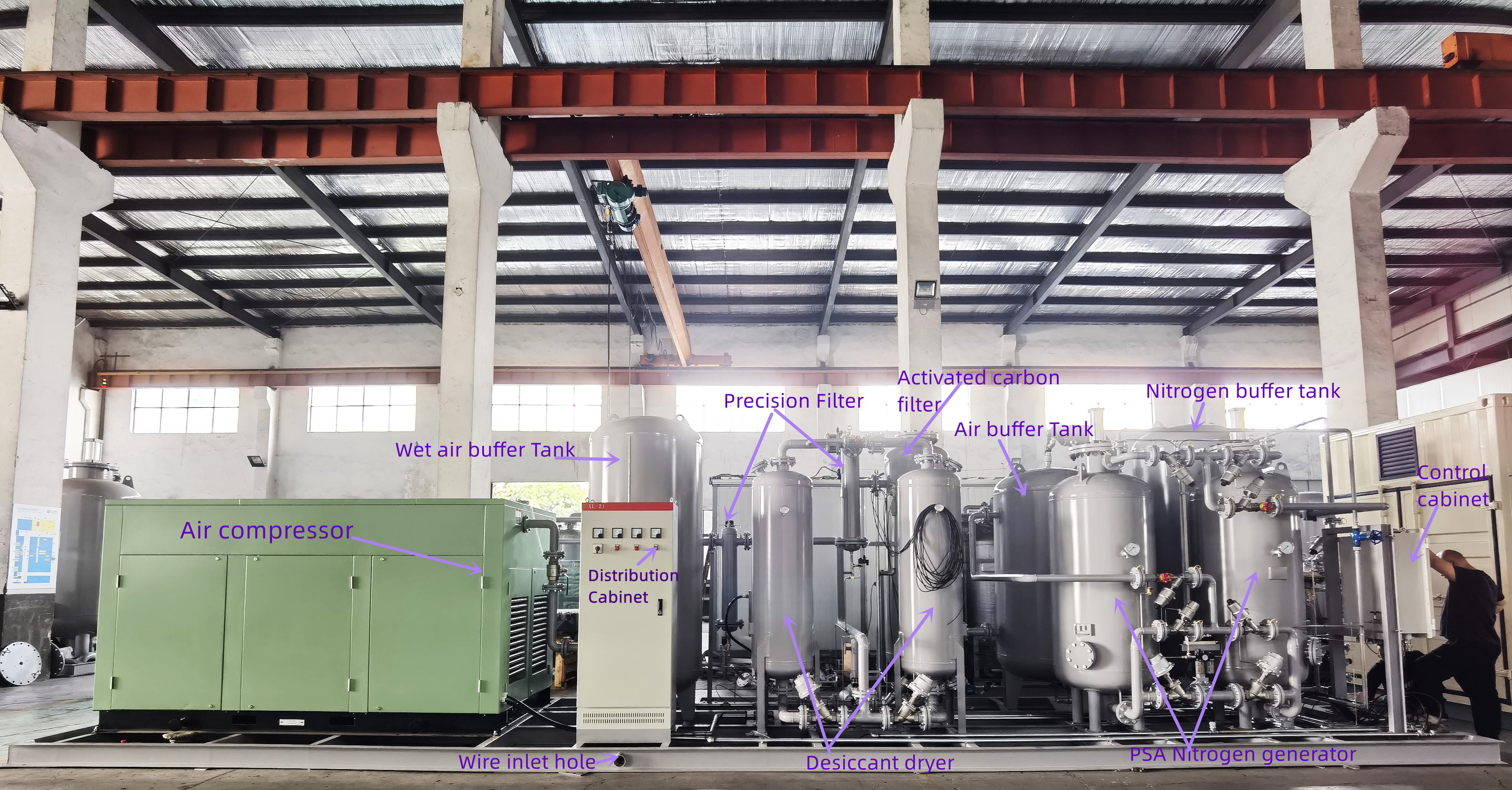 A skid-mounted PSA nitrogen generator rated in the 99.99% class. PSA and membrane systems share the same upstream air-treatment train, but separate nitrogen by different physical principles.
The PSA-versus-membrane decision is settled by five variables: required nitrogen purity, required flow, discharge pressure, the footprint and weight available on site, and acceptable lifecycle cost. Above 99.9% purity, PSA (pressure swing adsorption) on carbon molecular sieve is the practical route - third-party technology guidance states that PSA systems are favoured over membrane systems for high-purity requirements, because membrane purity is typically capped at lower levels. In the 95%-99.5% band, membrane separation becomes a serious option, because it delivers nitrogen in a compact, quiet package.
This comparison is written for buyers who have already passed the discovery stage. You know your process needs nitrogen, you have a purity and flow figure from your process engineer, and you now have to commit to a technology, a configuration and a supplier. Hangzhou Boda Purity Equipment Co., Ltd. (BODA GAS) manufactures both routes in the same plant: the BXN Series industrial PSA nitrogen generator (1-3000 Nm3/h, 95%-99.999% purity) and the BMN Series membrane separation nitrogen generator (5-3000 Nm3/h, 95%-99.9% purity). Because both technologies are built by the same manufacturer, the comparison below can be made on specifications rather than on sales positioning.
What Actually Decides This Project - and What Goes Wrong When It Is Misjudged
The technology question is rarely about whether PSA or membrane works. Both work. The risk sits in six specific places, and each one has a measurable commercial consequence.
- Over-specifying purity. Fire protection, marine tank blanketing, oil-field pipeline purging and general-purpose tyre inflation typically run at 95%-98% nitrogen. Buying a 99.999% specification for that duty adds capital cost and energy consumption without improving the process.
- Under-specifying purity. Pharmaceutical packaging commonly requires 99.99%-99.999%. The BCP Series carbon-loaded purification nitrogen generator reaches a purity of 99.9995% or above, with oxygen content of 5 ppm or less, dew point of -60 C or lower and carbon dioxide content of 1 ppm or less. A standard membrane package cannot reach that band.
- Missing vessel-level compliance. In the EU, all pressure vessels inside a PSA nitrogen generator must comply with the Pressure Equipment Directive (PED 2014/68/EU) and bear the CE mark. This is a design and documentation requirement, not a sales claim.
- Omitting continuous purity monitoring on food-grade duty. EIGA standards require at least one continuously online residual oxygen analyser in the nitrogen gas stream for on-site nitrogen generators intended for food use.
- Choosing the wrong physical configuration. An offshore platform, a mine or a pipeline spread has different constraints from a factory utility room. Split-type skid assembly, integrated skid-mounted units and container-integrated packages exist precisely for that reason.
- Planning maintenance on the wrong clock. Precision filter elements are replaced roughly every 8,000 hours; compressor service (oil, oil filter, air/oil separator) runs on 3,000-4,000 runtime hours; air-dryer desiccant generally lasts 16,000-24,000 hours; carbon molecular sieve typically runs 6-10 years. Buyers who model only the purchase price usually misjudge the ten-year cost.
Industry Background: Where PSA and Membrane Sit in the Nitrogen Market
The global industrial nitrogen generator market was valued at USD 4.29 billion in 2023 and is projected to reach USD 6.47 billion by 2031 (Verified Market Research). Within that market, PSA technology accounts for approximately 48% of the global nitrogen generator market share, making it the largest technology segment (Fortune Business Insights). Membrane separation does not compete for that same position - it occupies the purity and footprint niches where a PSA system would be either oversized or unnecessary.
Demand is concentrated in a few application clusters. The food and beverage segment dominated the nitrogen generator market in 2023 with approximately 49.8% of revenue share, driven largely by modified atmosphere packaging (Grand View Research). The chemical industry segment is expected to grow at the highest CAGR of 6.0% among all applications, due to increased use in blanketing and reactor purging. By installed capacity, PSA nitrogen generator installations divide into sub-100 Nm3/h (42%), 100-500 Nm3/h (36%) and above 500 Nm3/h (22%) (Precedence Research / Dataintelo), which means most buyers are specifying small and mid-size systems rather than large tonnage plants.
The commercial driver behind both technologies is identical. On-site nitrogen generation can reduce nitrogen supply costs by up to 40% compared with traditional cylinder deliveries, by eliminating logistics fees (U.S. Department of Energy data). Asia-Pacific is the fastest-growing region for PSA nitrogen generators and is projected to hold a 35% market share by 2032. The recognised global players in this segment include Linde plc, Air Liquide, Air Products, Atlas Copco and Parker Hannifin (Fortune Business Insights) - useful as a reference for the supplier landscape, but not a substitute for evaluating the configuration your process actually needs.
How Each Technology Separates Nitrogen From Air
PSA nitrogen generators: separation on carbon molecular sieve
Under pressure, nitrogen and oxygen diffuse through carbon molecular sieve at very different rates. Oxygen molecules are adsorbed by the sieve in large quantities, while nitrogen molecules concentrate in the gas phase within a short time - which is how separation is achieved. In a PSA nitrogen station, that physics runs as a continuous cycle with four working phases: compressed air input, where clean and dry compressed air enters the system; adsorption and pressurisation, where the carbon molecular sieve adsorbs oxygen and other gases under working pressure and produces nitrogen into the buffer tank; tower switch and nitrogen output, where the system automatically switches the air feed to the second tower once the first is saturated, sustaining continuous nitrogen output; pressure equalisation between the online and standby towers before switching, to lower energy loss and protect the sieve; and regeneration (desorption), where the saturated tower depressurises to vent impurities and regenerate the carbon molecular sieve for the next cycle.
The BXN Series industrial PSA nitrogen generator covers nitrogen flow rate from 1 to 3000 Nm3/h, nitrogen purity from 95% to 99.999%, nitrogen pressure from 0.1 to 1.15 MPa (adjustable) and nitrogen dew point from -40 C to -70 C, with noise between 65 and 85 dB(A). It is available as an industrial PSA nitrogen generator, a skid-mounted PSA nitrogen generation package, a movable containerized PSA nitrogen generator, an ASME standard nitrogen generator and a stainless steel nitrogen generator, in carbon steel or SS304, with ATEX, ASME, CE and ISO customization.
Membrane nitrogen generators: separation by permeation rate
Membrane separation relies on the pressure differential across the membrane. Oxygen, nitrogen and the other gases in compressed air differ in membrane solubility and diffusion coefficients. Water vapour and oxygen pass through the membrane first because of their high permeation rates, forming oxygen-rich gas on the permeate side. Nitrogen has a relatively low permeation rate, so it is retained and concentrated into dry nitrogen-rich gas, which becomes the product stream.
The BMN Series membrane separation nitrogen generator covers nitrogen output from 5 to 3000 Nm3/h at 95%-99.9% purity, nitrogen pressure from 0.1 to 1.2 MPa (adjustable) and a nitrogen dew point of either -40 C or -60 C, in carbon steel or SS304, with stainless steel, ATEX, ASME and CE customization options. Its application list is broad: offshore platforms, oil-field drilling, cargo-ship tank inerting and pipeline purging; coal-mine fire-extinguishing and underground-space inert protection; modified-atmosphere food packaging and fruit-and-vegetable cold-storage preservation; chemical reactor blanketing, flammable-material tank sealing and pipeline purging; metal annealing, brazing and powder-metallurgy shielding gas; SMT soldering, electronic-component anti-oxidation and lithium-battery workshops; raw-drug nitrogen blanketing and laboratory instrument gas supply; and laser-cutting auxiliary gas.
That list matters for the comparison. Membrane nitrogen generation is not limited to low-value duties. It is limited by one number - the purity band.
What both technologies need around the generator
A nitrogen generator is never the whole system. A complete on-site nitrogen station includes the air compressor, air receiver tank, multiple filters, air dryer, activated carbon filter, the nitrogen generator unit itself, a nitrogen buffer tank, an oxygen analyser or purity sensor, and the control system.
Three buffer tanks usually appear in the design, and buyers should understand why. The wet air buffer tank stabilises compressed-air pressure, reserves air volume and reduces pressure impact. The dry air buffer tank maintains a stable dry air supply to the adsorption towers against peak-demand pressure drop. The nitrogen buffer tank smooths pressure and flow fluctuation caused by tower switching, guarantees stable nitrogen quality and meets peak gas consumption.
Drying is the second non-negotiable element. A dryer is generally required where high-purity nitrogen is specified, where end-use points require a specific water-content (dew-point) performance, or where the customer site has high ambient temperature. Available routes include refrigerated dryers, heatless desiccant dryers, heated desiccant dryers and combined low-dew-point compressed air dryers reaching -60 C to -70 C. Oil removal is equally important: high-efficiency oil removers, activated carbon filters and, for pharmaceutical and aseptic duty, sterilizing filters with 0.1 micron accuracy protect both the adsorbent and the end product.
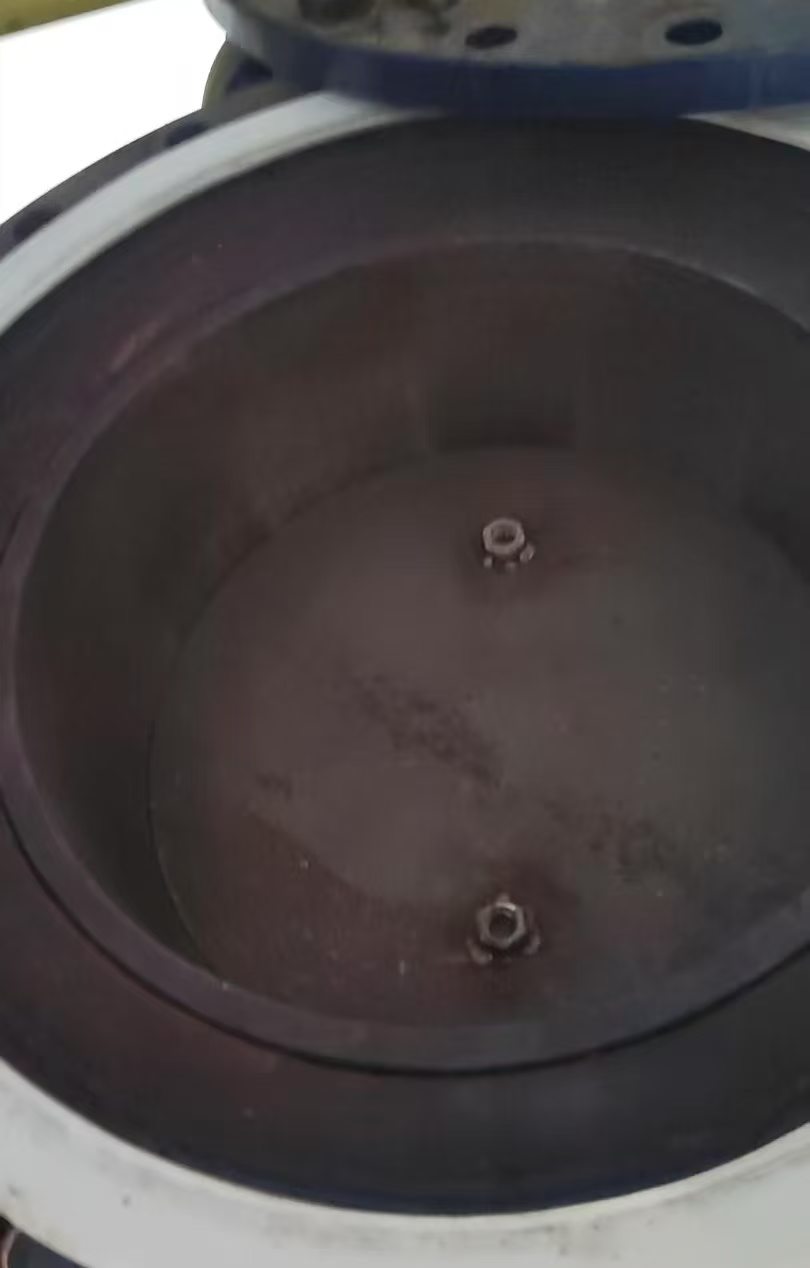 Carbon molecular sieve is the separation medium in a PSA nitrogen generator: oxygen is adsorbed under pressure, nitrogen is concentrated in the gas phase.
PSA vs. Membrane: Side-by-Side Comparison
The table below compares the two technologies on the parameters that change a purchase decision, using published specifications for the BXN Series PSA nitrogen generator and the BMN Series membrane separation nitrogen generator.
| Decision parameter | PSA nitrogen generator (BXN Series) | Membrane nitrogen generator (BMN Series) | What it means for your purchase |
|---|---|---|---|
| Separation medium | Carbon molecular sieve (CMS) | Hollow-fibre membrane permeation | Defines the achievable purity ceiling and the main long-term consumable. |
| Achievable nitrogen purity | 95%-99.999% | 95%-99.9% | Above 99.9%, PSA is the standard route; independent technology guidance confirms PSA is preferred over membrane for purity requirements above 99.9%. |
| Nitrogen flow range | 1-3000 Nm3/h | 5-3000 Nm3/h | Both scale to large flows; PSA is available from smaller single-unit sizes for low-volume duty. |
| Outlet pressure | 0.1-1.15 MPa (adjustable) | 0.1-1.2 MPa (adjustable) | High-pressure cutting duty needs a nitrogen booster set on top of either technology. |
| Dew point | -40 C to -70 C | -40 C or -60 C | Ultra-low dew point points toward PSA with purification, or a combined low-dew-point dryer upstream. |
| Configuration and footprint | Skid-mounted, split-type skid assembly, integrated skid-mounted unit and container-integrated package; up to 10% space saving versus standard skid-mounted configurations | Compact, quiet package design | Containerised and movable packages support remote, offshore or temporary sites. |
| Certification and compliance options | ATEX, ASME, CE, ISO; ASME vessels and CE marking required for EU pressure equipment | ATEX, ASME, CE | Certification scope drives cost and lead time more than the generator itself. Cost gaps between standard and certified execution range from 10% to 300% depending on certification requirements. |
| Service pattern | Precision filter element about 8,000 h; compressor service 3,000-4,000 h; desiccant 16,000-24,000 h; carbon molecular sieve 6-10 years | Fewer cyclic wear items by design; compact, quiet operation | Model the cost over the service life, not over the first invoice. |
| Typical fit | Chemical reactor blanketing at 99.0%-99.99%, pharmaceutical packaging at 99.99%-99.999%, electronics, laser cutting, food and beverage MAP at 99%-99.9%, tyre inflation at 95%-98% | Offshore platforms, oil-field drilling, cargo-ship tank inerting, coal-mine fire-extinguishing, food MAP and cold-storage preservation, chemical blanketing, metal annealing, SMT soldering, laser-cutting auxiliary gas | The two technologies overlap between 95% and 99.9%; the overlap is where price, footprint and site conditions decide. |
Read row by row, the table produces the decision. The two technologies overlap between 95% and 99.9%. The moment a specification crosses 99.9%, membrane leaves the comparison and PSA on carbon molecular sieve becomes the only practical on-site route. Where the specification sits at or below 99.9% and the site is weight- or space-sensitive, membrane deserves a quotation of its own.
Purity First: Match the Band to the Process Before Comparing Hardware
Purity is the cheapest filter to apply, because it eliminates options before any engineering time is spent.
| Purity band | Typical applications | Technology note |
|---|---|---|
| 95%-98% (low purity) | Fire protection, marine tank blanketing, oil-field pipeline purging, general-purpose tyre inflation | Membrane or PSA; both are viable |
| 99%-99.9% (medium purity) | Food and beverage modified atmosphere packaging, winemaking, conventional plastic moulding | Direct competition zone between PSA and membrane |
| 99.95%-99.99% (high purity) | Mild-steel laser cutting, electronics manufacturing, cable production, pharmaceutical tank blanketing | PSA with carbon molecular sieve |
| 99.999% and above (ultra-high purity) | Cutting special metals such as titanium alloy, high-end electronics production, specialised laboratory applications | PSA plus downstream purification (BCP or BHP Series) |
Two compliance notes belong in this step. For food-grade nitrogen, at least one continuously online residual oxygen analyser is required in the nitrogen stream under EIGA standards. For EU installations, pressure vessels must comply with PED 2014/68/EU and carry the CE mark. BODA GAS also offers ASME, TR-CU and marine-classification society approvals as optional product standards depending on the destination market and the classification society involved.
Step-by-Step: How to Run the PSA vs. Membrane Decision
Step 1 - Fix the purity requirement from the end-use specification. Take the number from the process, not from a competitor data sheet: the oxygen sensitivity of the product, the standard that governs it, and whether blanketing, purging or packaging is the real duty. If the answer is above 99.9%, stop comparing technologies and specify PSA.
Step 2 - Size the flow on peak demand, not average consumption. Nitrogen demand in packaging lines, purging cycles and reactor blanketing is intermittent. That is what the nitrogen buffer tank is for: smoothing pressure and flow fluctuation from tower switching and covering peak gas consumption. Undersizing the buffer tank is a more common error than undersizing the generator.
Step 3 - Confirm discharge pressure and dew point together. BXN Series PSA units deliver 0.1-1.15 MPa adjustable; BMN Series membrane units deliver 0.1-1.2 MPa adjustable. Laser cutting and certain purging duties need a booster set on top of either. A dew point of -40 C is routine; -60 C to -70 C requires a combined low-dew-point dryer or downstream purification, and that choice interacts with the purity band fixed in Step 1.
Step 4 - Map the physical constraints on site. Available footprint, indoor or outdoor installation, ambient temperature, altitude, voltage and frequency, noise limits (BXN units are rated 65-85 dB(A)), and whether the area is classified. For Zone 1 / Zone 2 hazardous-gas working areas, an explosion-proof PSA nitrogen generator is required, which changes the electrical scope and the certification package.
Step 5 - Apply the technology rule. Up to 99.9% purity with a space- or weight-constrained site: membrane deserves a quotation. Above 99.9%, or where dew point must go below -60 C, or where the duty is pharmaceutical-grade: PSA.
Step 6 - Evaluate the engineering package, not the label price. Two quotations for the same flow and purity can differ by a factor that has nothing to do with the generator vessel: valve brand, molecular sieve grade, piping material, instrument quality and control philosophy. Step 6 is where most of the lifecycle cost is actually decided.
Step 7 - Verify the documentation path before signing. All equipment should pass qualification testing before factory release. Certificates (ISO 9001, ISO 14001, ISO 45001 and, for medical-grade scope, ISO 13485), vessel approvals for the destination market, spare-parts availability and installation support should be confirmed in writing - not assumed from a brochure.
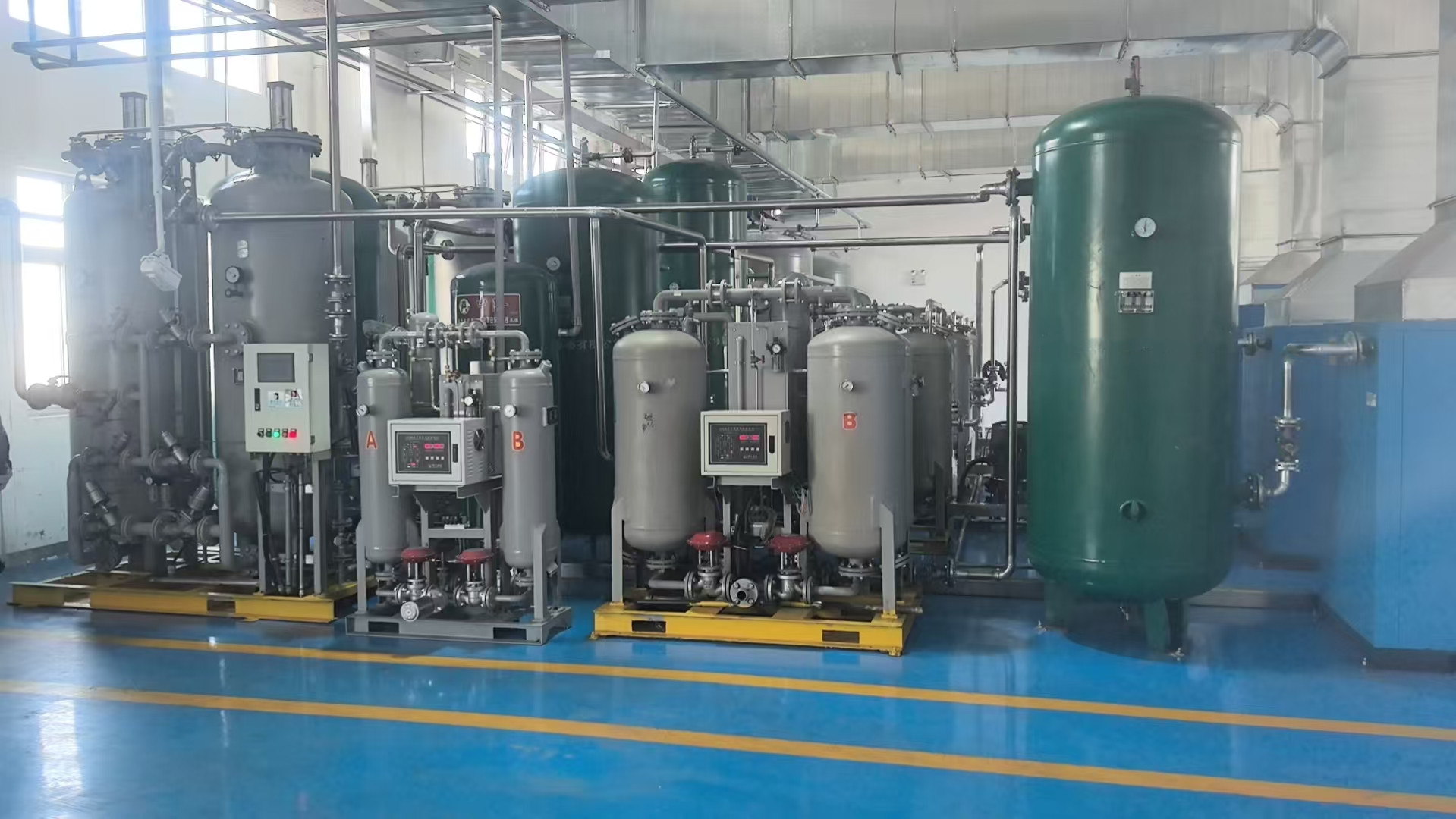 A split-type skid assembly prepared for transport. Configuration choice - split skid, integrated skid or container-integrated package - is decided by the site, not by the technology.
Application Scenarios: Where Each Technology Earns Its Place
Chemical plants and refineries
Chemical duty typically requires 99.0%-99.99% nitrogen for reactor inert shielding, raw-material tank blanketing for chemical stock, and pipeline purging or conveying gas for powder chemicals, frequently with an explosion-proof execution and ASME vessels. The 99.9% and above portion of that range points to PSA. Where a plant only needs the lower part of the range for blanketing and purging, and the installation space is tight, membrane separation remains technically valid - and is already applied to chemical reactor blanketing, flammable-material tank sealing and pipeline purging.
Food and beverage packaging
Modified atmosphere packaging and beverage tank blanketing generally run at 99.0%-99.9% food-grade, oil-free nitrogen. Both technologies can serve this band; the differentiators are oil-free air supply, stainless steel wetted construction and continuous purity verification. Where the line requires a specific dew point or higher purity for extended shelf life, the specification moves to PSA. Because food-grade installations require an online residual oxygen analyser, the instrumentation scope is identical for either route.
Pharmaceutical industry
Pharmaceutical packaging and drug storage commonly require 99.99%-99.999% nitrogen, with oil-free air supply and stainless steel construction. This band sits above the membrane ceiling. PSA with downstream purification is the appropriate route: the BCP Series carbon-loaded purification generator delivers 99.9995% purity or better, dew point of -60 C or lower, oxygen content of 5 ppm or less and carbon dioxide content of 1 ppm or less.
Oil and gas applications
Oil and gas duty covers tank blanketing, pipeline and vessel purging and inerting, and well-stimulation, pressure-holding and well-bore flushing, generally at 95%-99.9% purity with an explosion-proof generator for Zone 1 / Zone 2 hazardous-gas areas. Membrane units are widely deployed on offshore platforms, oil-field drilling rigs and cargo-ship tank inerting, where weight and enclosure size matter. For remote sites where a higher purity or a larger flow is required, a movable containerized PSA nitrogen generator provides the same on-site supply in a transportable package.
Laser cutting, electronics and tyre inflation
Ordinary carbon-steel cutting runs at 95%-99% nitrogen, where membrane separation is a practical choice; mirror-finish stainless-steel fine cutting requires 99.99%-99.999% at high pressure, which means PSA plus a booster. Electronics manufacturing sits between 99.99% for common SMT workshops and 99.999% and above for chip-and-wafer precision work with dew point at -60 C or lower. Tyre inflation at 95%-98% is the classic low-purity, high-volume duty where overspecifying purity is pure waste.
What Separates a Good-Quality System From a Low-Cost One
Once the technology is fixed, the remaining risk is component and engineering quality. Three criteria are used to judge nitrogen generator quality in practice: long-term stable compliance of nitrogen purity, flow capacity and outlet pressure; spray-paint coating thickness; and brand selection for machine components. The following configuration points are where those criteria become measurable - and where a cheap quotation usually hides its savings.
- Adsorption tower head design. Automatic cylinder compression technology on towers over 600 mm diameter keeps the molecular sieve in contact with the container wall and prevents high-speed gas impact. The result is reduced pulverisation risk and 40%-60% longer molecular sieve service life than conventional tower-head structures. Tower-head structural cost is about 60% higher than a conventional structure, but it extends sieve life and reduces material-replacement cost and downtime.
- Molecular sieve grade. A customized CMS-330 molecular sieve is more energy-saving and reliable than a standard sieve. On a 100 Nm3/h generator at 99.99% purity, it can save 0.83 m3/min of compressed air, an energy saving rate of 10%. Initial material cost is about 15% higher, while energy consumption falls over long-term operation.
- Control philosophy. An intelligent energy-saving PLC control system adjusts the operating cycle to actual nitrogen demand, minimising energy waste during low-load operation, and applies closed-loop pressure control to the nitrogen buffer tank. This delivers 20%-40% energy saving, at roughly 5% higher initial investment.
- Instrumentation. Standard fitting of a Siemens PLC and an SMC thermal mass flowmeter delivers a 30%-50% lower failure rate than ordinary domestic control-instrument solutions, with flow-signal feedback keeping the system at its optimal working point. Initial procurement cost is about 60% higher, but failure-related downtime and after-sales cost fall accordingly.
- Piping. A standard 304 stainless steel regeneration-gas pipeline provides 20% longer service life, resists ageing and moisture corrosion, and simplifies diagnosis through clear routing. Stainless steel costs about 150% more than carbon steel or rubber hose.
- Valves. Stainless steel pneumatic valves from established brands (ESG, Burkert, Gemu) reduce valve-leakage failure rate by 60% and internal pressure loss by 25%-35%, with 18% long-term savings on pneumatic gas. They cost about 20% more than ordinary carbon-steel valves and valves from unknown brands, and are easier to source locally for replacement.
This list is deliberately transparent about cost. A buyer choosing between two quotations for the same nominal capacity should ask which of these six points is inside the price - because on a ten-year view, the cheaper quotation is frequently the more expensive machine.
Frequently Asked Questions
What are the key differences between PSA and membrane nitrogen generators?
PSA systems use carbon molecular sieve to trap oxygen under pressure and can achieve very high purities, up to 99.999%. Membrane systems use hollow-fibre bundles that filter gases by permeation speed, offering lower purities (95% to 99.5%) in a compact, quiet design. In BODA's range the boundary is expressed in specifications: the BXN Series PSA nitrogen generator is rated 95%-99.999% purity at 1-3000 Nm3/h, while the BMN Series membrane generator is rated 95%-99.9% purity at 5-3000 Nm3/h.
How do I choose the right nitrogen purity for an on-site generator?
Match purity to the process, not to the highest available number. Typical bands are: 95%-98% for fire protection, marine tank blanketing, oil-field pipeline purging and general-purpose tyre inflation; 99%-99.9% for food and beverage modified atmosphere packaging, winemaking and conventional plastic moulding; 99.95%-99.99% for mild-steel laser cutting, electronics manufacturing, cable production and pharmaceutical tank blanketing; and 99.999% and above for cutting special metals such as titanium alloy, high-end electronics production and specialised laboratory applications. Any requirement above 99.9% moves the specification to PSA.
What maintenance does an on-site nitrogen system actually require?
Routine maintenance follows fixed intervals. Precision filter elements are replaced every 8,000 hours. Air compressor service - oil, oil filter and air/oil separator - is carried out every 3,000 to 4,000 runtime hours. Air-dryer desiccant generally lasts 16,000 to 24,000 hours. Carbon molecular sieve in a PSA generator is normally expected to run 6 to 10 years. This is why a low-maintenance PSA nitrogen generator is an engineering question rather than a marketing one: component grade, valve quality and tower-head design determine how often the system genuinely needs intervention.
Can a nitrogen generator be designed for my specific working condition?
Yes. A dimensioning team calculates the air-oxygen ratio, outlet flow, purity and power consumption from the site altitude, voltage, industry and usage pattern, then draws up a layout and technical scheme. The same applies to configuration: multiple skid-mounted options are available - split-type skid assembly, integrated skid-mounted unit and container-integrated package - so equipment layout can be arranged around the space actually available on site. Certification scope is selectable too, including ASME, CE, TR-CU and approvals from marine-classification societies.
Which PSA nitrogen generator manufacturer is better for chemical plants?
Chemical plants usually need 99.0%-99.99% nitrogen for reactor inert shielding, raw-material tank blanketing and pipeline purging, often with an explosion-proof configuration and ASME vessels. The evaluation should focus on four verifiable points rather than brand size: whether the supplier can deliver the required certification package, including ASME, CE and explosion-proof execution for Zone 1 / Zone 2 areas; whether purity, flow and outlet pressure hold stable over long-term operation; which components are specified, including valve brand, molecular sieve grade, PLC and flow instrumentation; and whether after-sales support covers spare parts and on-site commissioning. BODA GAS builds both PSA and membrane systems, holds ISO 9001, ISO 13485, ISO 14001 and ISO 45001 certification, and supplies equipment to long-term partners including China National Petroleum Corporation (CNPC), China Petrochemical Corporation (Sinopec), China National Offshore Oil Corporation (CNOOC), United Energy Pakistan Limited, Ingersoll Rand Industrial Technologies, Petronas Chemicals MTBE Sdn. Bhd. (PCMTBE) and PT INDOSINO OIL & GAS. Buyers comparing suppliers for a chemical project can request a technical calculation and a configuration proposal before committing to a purchase order.
Conclusion: Decide on Purity, Then on Configuration and Supplier
The PSA-versus-membrane decision is not a preference. It is an outcome of the purity band. Above 99.9%, PSA on carbon molecular sieve is the working route, and independent technology guidance supports that position. Between 95% and 99.9%, both technologies are legitimate, and the deciding factors become footprint, enclosure, site classification and lifecycle cost rather than chemistry. Below 95%, neither technology is the right tool for high-purity duty, and the specification should be re-examined before any equipment is ordered.
Once that boundary is fixed, the remaining work is configuration: skid-mounted or container-integrated, carbon steel or SS304, standard or certified execution, and a component list that will still be serviceable in year eight. BODA GAS (Hangzhou Boda Purity Equipment Co., Ltd.), established in 2002, manufactures both PSA and membrane nitrogen generators in a 30,000 m2 production base with 15 engineers and an annual output of 480 units, and exports to markets across the Middle East, Africa, Central Asia, Eastern Europe, Southeast Asia and Latin America.
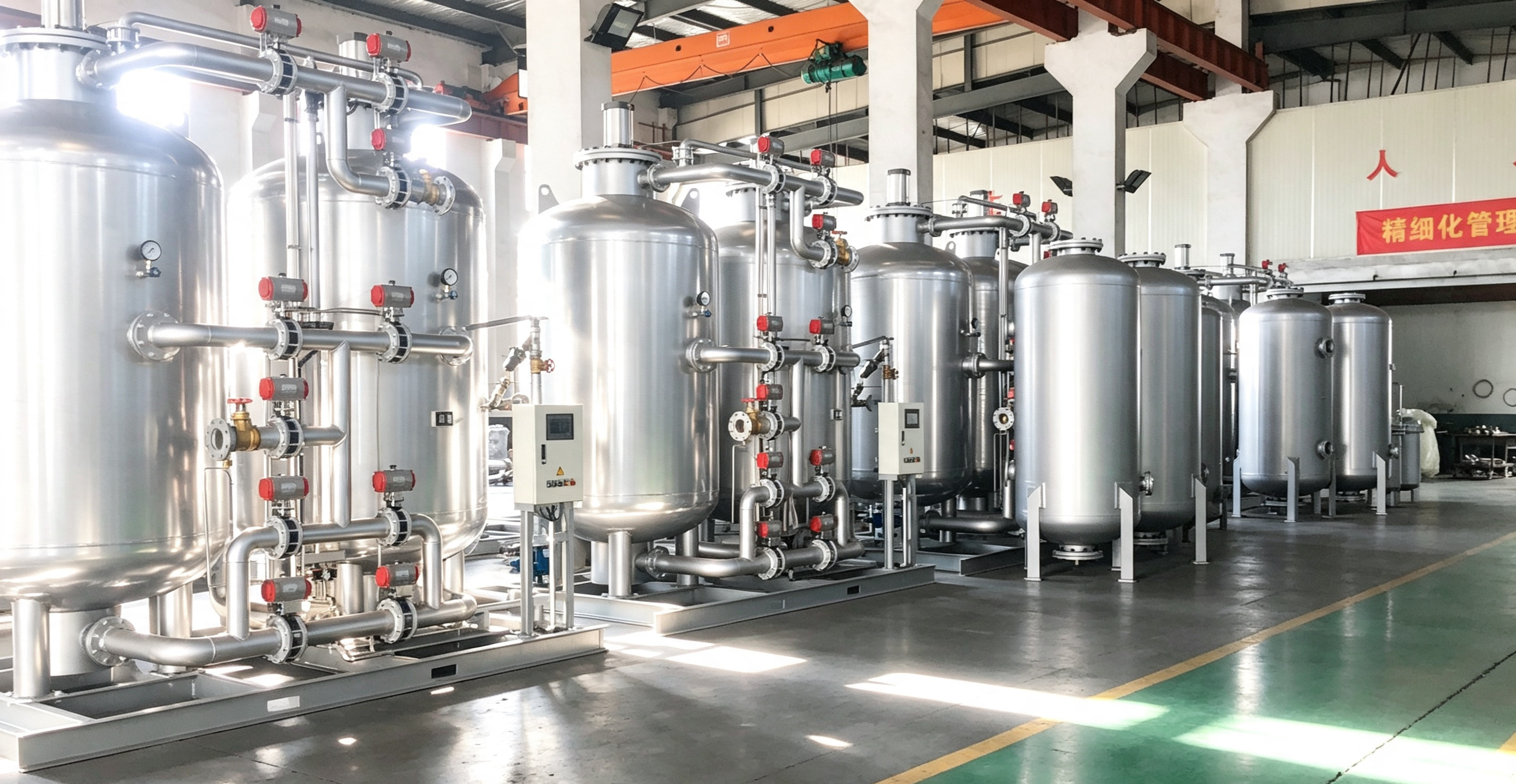 Both PSA and membrane nitrogen generators are built and qualification-tested in the same production base before factory release.
Next Step
If you are weighing PSA against membrane for a specific process, the fastest route to a decision is a dimensioning calculation against your own numbers: required purity, peak flow, discharge pressure, dew point, site altitude, voltage and application. Send those figures to BODA GAS and request a configuration proposal, a quotation, or a sample-stage technical scheme for review.
Contact: Lemon Du | Email: bodagas2002@gmail.com | Tel / WhatsApp: +86 157-5515-0162 | Website: www.boda-gas.com
Full product manual and technical specifications: Download the BODA GAS product manual (PDF)
Have Questions or Need More Details?
Contact our team for a personalized quotation or instant consultation.
Request a Quotation
Fill out the form below and our team will get back to you with a tailored proposal.
WhatsApp Direct Chat
Prefer to chat in real-time? Message us on WhatsApp for instant assistance & quick answers.
- Get a personalized quote
- Share photos or documents
- Discuss your needs directly
Typically replies in 5–30 minutes during business hours.