
PSA vs Membrane Nitrogen Generators: Head-to-Head Decision Guide
PSA and membrane nitrogen generators perform the same job — turning compressed air into usable nitrogen on site — but they reach different purity ceilings, occupy different footprints and carry different maintenance loads. At evaluation stage the question is no longer which technology is better. It is which configuration protects your process purity, fits the space you actually have, and holds those numbers for the life of the plant.
Choose by purity first, then by output. BODA GAS membrane units (BMN Series) cover 95%–99.9% purity at 5–3000 Nm³/h. PSA units (BXN Series) cover 95%–99.999% at 1–3000 Nm³/h. Where a process needs 99.9995% and above, the carbon loaded purification nitrogen generator (BCP Series) delivers ≥99.9995% purity, O₂ ≤5 ppm, CO₂ ≤1 ppm and a dew point of ≤-60°C at 1–500 Nm³/h.
Both product lines come from BODA GAS (Hangzhou Boda Purity Equipment Co., Ltd.), a manufacturer established in 2002 and based in Hangzhou, Zhejiang Province, China, producing PSA nitrogen generators, PSA oxygen generators and compressed air purification equipment from a production base of more than 30,000 m². They are not rival answers to the same question. They are two answers to two different working points, and the line between them usually falls at 99.9%.
Problem Definition: Why Buyers Pick the Wrong One
Most PSA-versus-membrane mistakes are not technical failures. They are sequencing failures — the decision gets made against a budget before the purity, dew point and site conditions are fixed. Four patterns repeat.
- Specifying by brand instead of by purity. A membrane unit is efficient when purity sits inside its range. A 99.99% process sits outside the 95%–99.9% band of the BMN Series, so no amount of vendor familiarity fixes the gap.
- Leaving dew point until the end. BXN covers -40°C to -70°C; BMN covers -40°C or -60°C. A process needing -70°C cannot be served by a default configuration on either route.
- Treating equipment price as project cost. Running cost is set by filter, desiccant and sieve replacement intervals, plus the compressed air that feeds the unit — none of which appear on the quotation.
- Treating the installation environment as a warehouse decision. Indoor placement, hazardous-area classification and noise limits can eliminate one technology before the technical comparison even starts. The BXN Series operates at 65–85 dB(A), which belongs in the site plan.
Industry Background: On-Site Nitrogen Is Now Routine
Market data explains why this comparison comes up so often. The global industrial nitrogen generator market was valued at USD 4.29 billion in 2023 and is projected to reach USD 6.47 billion by 2031 (Verified Market Research). Pressure swing adsorption accounts for approximately 48% of the global nitrogen generator market share, making it the largest technology segment (Fortune Business Insights).
Project sizes are equally telling. PSA installations split into sub-100 Nm³/h systems at 42%, 100–500 Nm³/h at 36% and above 500 Nm³/h at 22% (Precedence Research / Dataintelo). Most purchases therefore land inside the flow range both technologies can serve — which is precisely why purity, footprint and dew point become the deciding variables rather than output alone.
Demand is concentrated in predictable sectors. The food and beverage segment held approximately 49.8% of nitrogen generator revenue share in 2023, driven by modified atmosphere packaging (Grand View Research). Those buyers are not paying for extreme purity; they are paying for repeatable purity. The higher-purity demand that pushes membrane systems to their limit comes from electronics, pharmaceuticals and battery manufacturing.
Detailed Solution: What Each Technology Actually Does
PSA separation — carbon molecular sieve under pressure
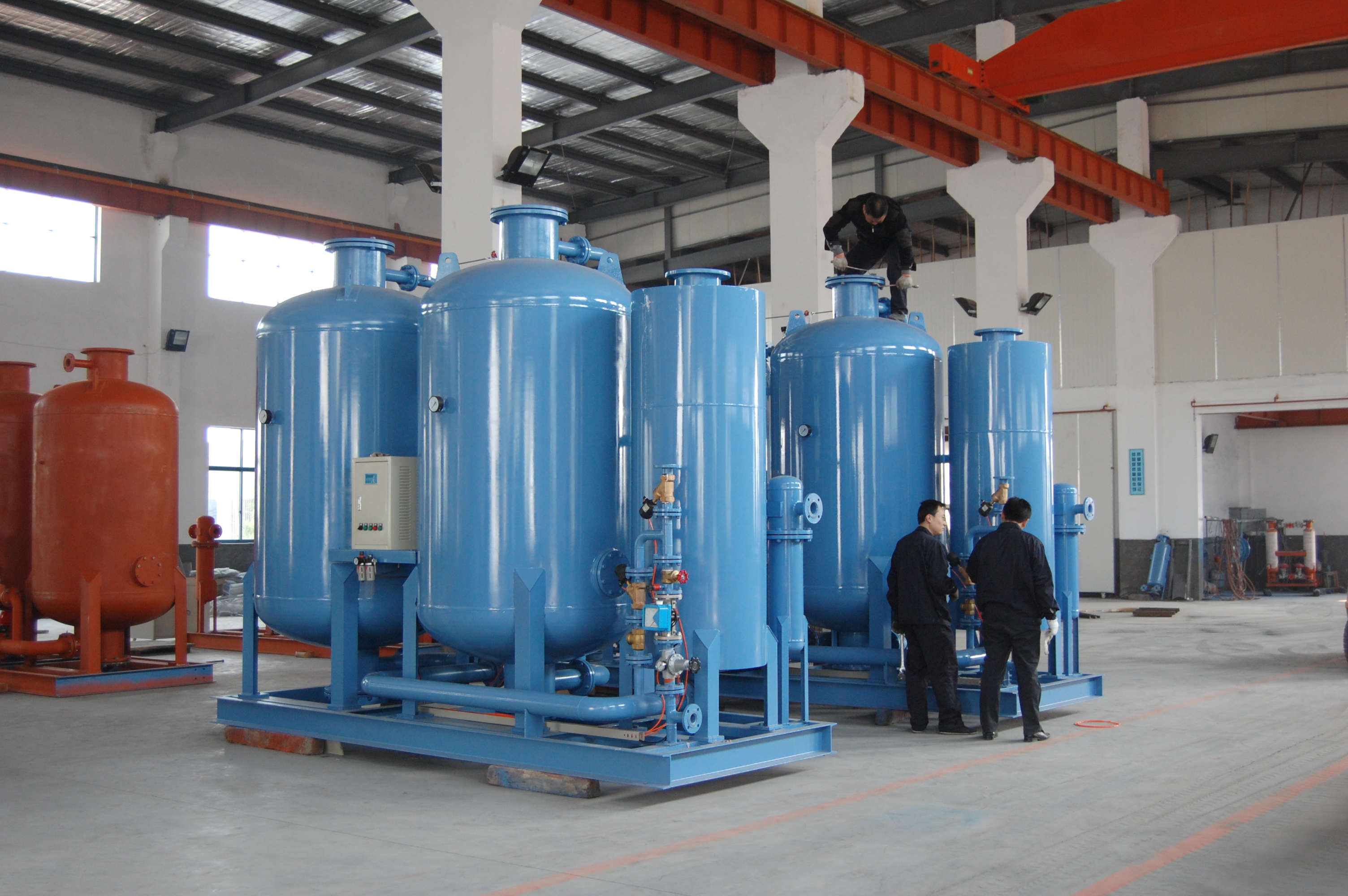
In pressure swing adsorption, pre-treated compressed air enters an adsorption tower filled with carbon molecular sieve. Under pressure, the sieve preferentially adsorbs oxygen while nitrogen passes through as product gas. Twin towers alternate between adsorption and regeneration so nitrogen flows continuously. BODA GAS BXN Series PSA nitrogen generators run at 1–3000 Nm³/h, 95%–99.999% purity, 0.1–1.15 MPa adjustable outlet pressure, -40°C to -70°C dew point and 65–85 dB(A), built in carbon steel or SS304 and customisable for ATEX, ASME, CE and ISO.
Membrane separation — differential permeation, no adsorbent
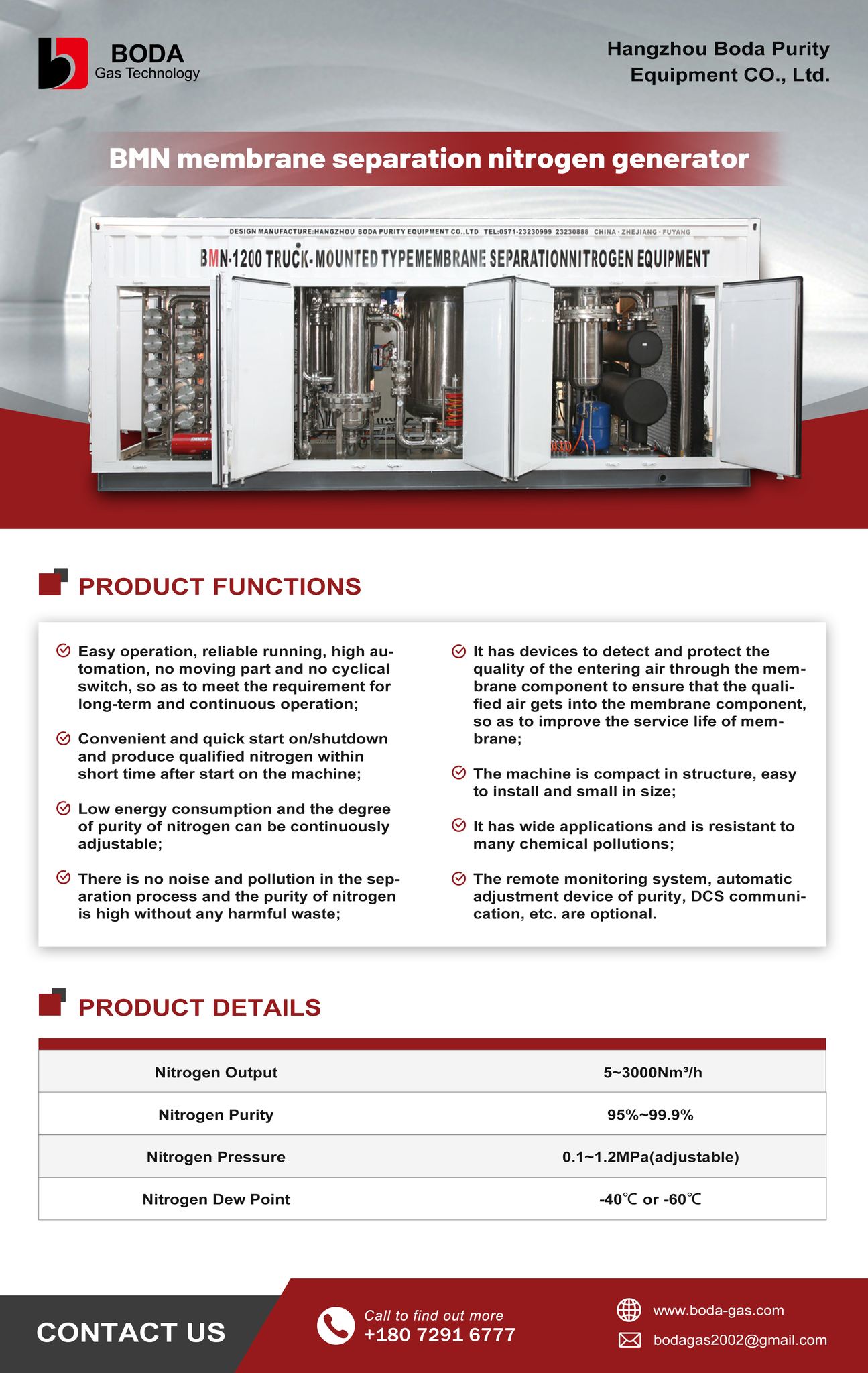
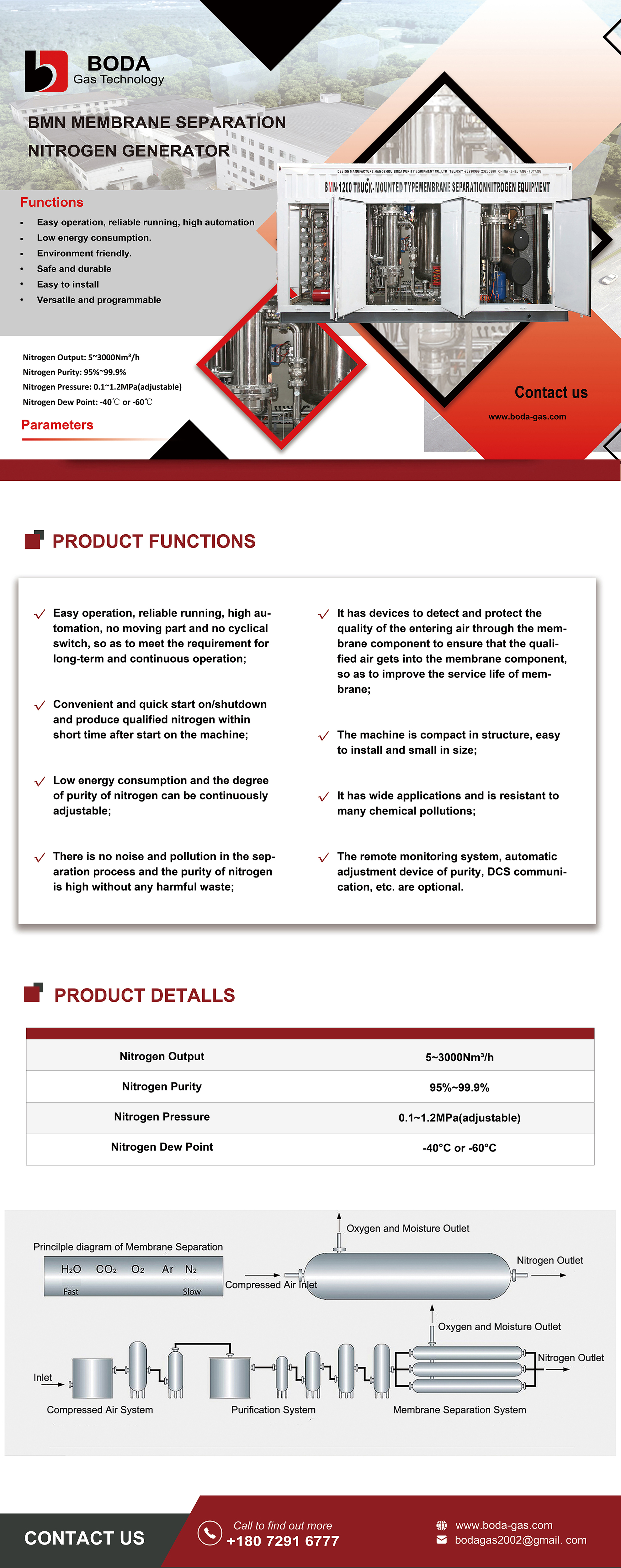
The BMN Series works on the pressure differential across a membrane module. Oxygen, nitrogen and other gases from compressed air differ in membrane solubility and diffusion coefficients; water vapour and oxygen permeate first to form an oxygen-rich stream, while nitrogen is retained and concentrated into dry nitrogen-rich gas. The BMN Series covers 5–3000 Nm³/h at 95%–99.9% purity, 0.1–1.2 MPa adjustable pressure and a -40°C or -60°C dew point, with stainless steel, ATEX, ASME and CE customisation.
The practical difference follows from that design. A membrane unit carries no carbon molecular sieve bed and no adsorption-regeneration cycle, so the separation sits inside a membrane module bank rather than a twin-tower arrangement. That is what allows compact, quiet continuous operation and direct production-floor installation. It is a real advantage below 99.9% — and it is cancelled out by the purity ceiling above it.
The path above 99.9%: adding a purification stage
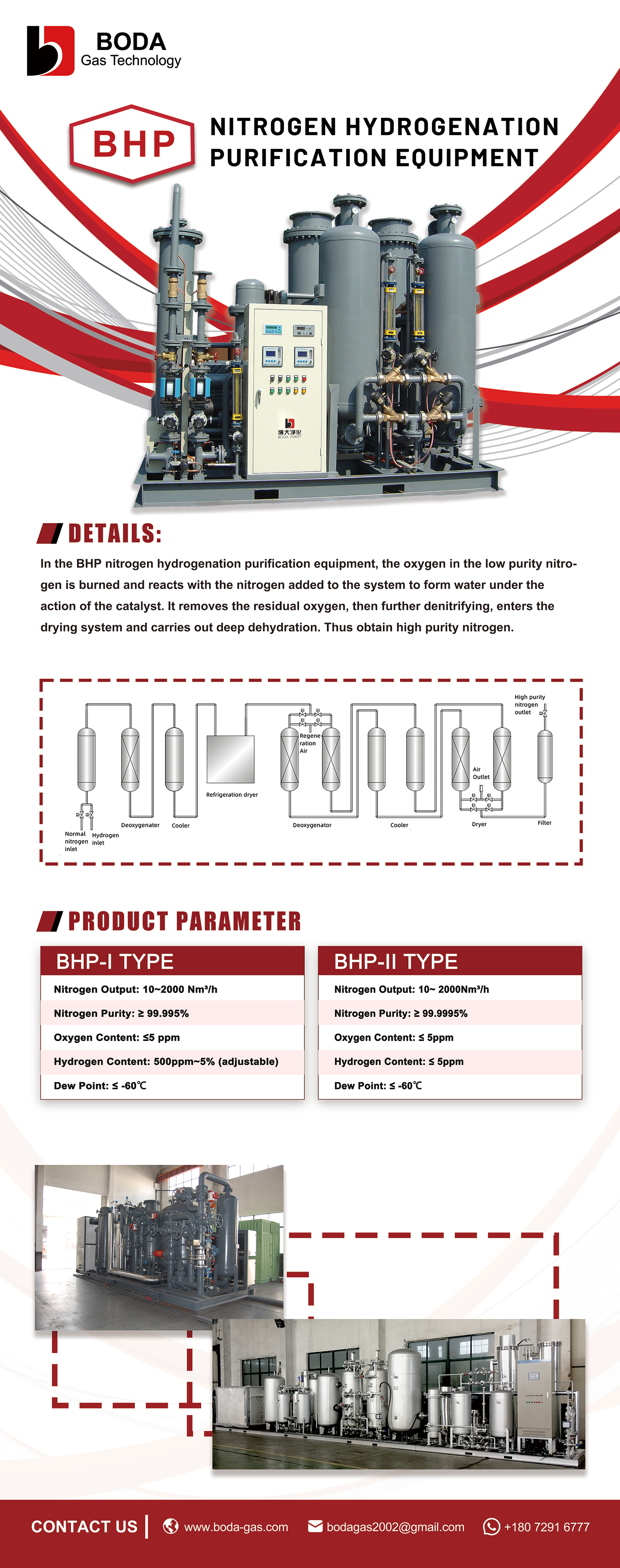
Neither standard separation route reaches 99.9995% on its own. That purity is produced by a dedicated purification stage. The BCP Series carbon loaded purification nitrogen generator delivers ≥99.9995% purity, O₂ ≤5 ppm, CO₂ ≤1 ppm and a dew point of ≤-60°C across 1–500 Nm³/h, with stainless steel, ATEX, ASME and CE customisation. The industry position is consistent with this: because membrane purity is typically capped at lower levels, PSA systems are favoured over membrane systems where requirements exceed 99.9% (Atlas Copco).
Six criteria that actually set the specification
- Required purity. Write the number in % or ppm O₂, not as "high purity". Below 99.9% both routes are viable. Above 99.9% the plan is PSA plus purification.
- Nitrogen output. Size for peak demand, not average. BXN spans 1–3000 Nm³/h; BMN spans 5–3000 Nm³/h.
- Footprint and installation environment. Membrane units are compact and quiet enough for direct production-floor installation. PSA units bring a larger equipment arrangement and a stated 65–85 dB(A) range on BXN, which belongs in the layout drawing rather than in a footnote.
- Continuous operation. Both routes are built for round-the-clock duty. The difference sits in the maintenance profile — PSA includes an adsorption-regeneration sequence and a sieve bed with a finite replacement horizon.
- Pre-treatment dependency. Both depend on clean, dry compressed air. Where the process demands a lower dew point, the specification moves into the dryer range rather than the generator alone.
- Maintenance and lifecycle cost. On the PSA side the routine intervals are precision filter elements around every 8000 hours, standard air compressor service at roughly 3000–4000 runtime hours, desiccant at 16000–24000 hours and carbon molecular sieve at 6–10 years. Convert these into runtime hours before comparing quotations.
Step-by-Step Breakdown: How to Close the Decision
Step 1 — Fix purity and dew point. Put both into the specification sheet before any supplier conversation. If the process needs more than 99.9%, route the project to PSA and plan the purification stage in the same pass.
Step 2 — Confirm flow and pressure. Use peak flow. Then confirm the outlet pressure the process requires — BXN supports 0.1–1.15 MPa and BMN supports 0.1–1.2 MPa, both adjustable.
Step 3 — Check the installation environment. Available floor area, indoor or outdoor placement, hazardous-area classification and noise limits. This step alone eliminates one option in most projects.
Step 4 — Match the application. Work through the application set in the next section and ask which purity band each process point falls into, not which technology the site already has.
Step 5 — Qualify the supplier's delivery capability, not only the product. BODA GAS provides OEM and ODM production, with customisation across flow rate, purity, pressure, dew point, material, production standard, voltage, logo, nameplate and painting colour. Monthly capacity is 40 units, lead time is 25–45 days, MOQ is 1 unit, and every unit undergoes 100% testing covering visual inspection and function inspection before factory release. After-sales covers a 12-month equipment guarantee, on-site and remote installation guidance, operation-staff training and remote technical support.
Use Cases: Which Route Each Application Picks
Equipment that looks similar on a drawing separates sharply once the process point is fixed. These five applications are the ones that drive most of the decision.
Laser cutting
Ordinary carbon steel cutting generally runs at 95%–99%. Mirror-finish stainless steel fine cutting moves to 99.99%–99.999% with high-pressure nitrogen output. That upper band belongs to the PSA route — BXN, with BCP purification where required. Membrane units appear in the BMN application set as laser-cutting auxiliary gas and workpiece surface treatment, but not as the answer for mirror-cut stainless.
Raw-drug blanketing
Raw-drug nitrogen blanketing appears in the application lists of both technologies, so the deciding factor is the purity band. Pharmaceutical process points typically run at 99.99%–99.999%, which pushes the choice to PSA with purification rather than standard membrane separation.
Semiconductor wafer purging
Chip and wafer precision manufacturing runs at 99.999%–99.9999% with a dew point of ≤-60°C. That range sits with purification equipment, not the BMN Series. The BCP application set explicitly covers semiconductor wafer purging, SMT soldering and electronic-component anti-oxidation gas.
Photovoltaic sintering
The BCP Series application set also covers PV-cell sintering, silicon-wafer processing and thin-film deposition process gas. The same PSA-plus-purification route applies, and the membrane option does not reach the band.
Lithium-ion battery electrode drying
Battery manufacturing straddles both routes. BCP covers electrode drying, electrolyte blanketing and cell-sealing shielding gas; BMN covers the general battery-workshop envelope at lower purity. Where a single project contains both process points, size the system against the highest-purity point rather than the average — a second, lower-purity stream can then be served by the appropriate unit.
Applications without an ultra-high-purity requirement move faster. Food and beverage packaging typically sits at 99.0%–99.9%; oil and gas tank blanketing and pipeline purging at 95%–99.9%; general tyre inflation at 95%–98%. At those purity bands, the membrane unit's compact footprint and simpler consumable profile become the deciding advantage.
Comparison Table: PSA vs Membrane, Side by Side
| Decision factor | PSA — BXN Series | Membrane — BMN Series |
|---|---|---|
| Separation principle | Carbon molecular sieve adsorbs oxygen under pressure | Differential permeation through a membrane module |
| Nitrogen purity | 95%–99.999% | 95%–99.9% |
| Nitrogen output | 1–3000 Nm³/h | 5–3000 Nm³/h |
| Outlet pressure | 0.1–1.15 MPa (adjustable) | 0.1–1.2 MPa (adjustable) |
| Nitrogen dew point | -40°C to -70°C | -40°C or -60°C |
| Noise | 65–85 dB(A) | — |
| Material | Carbon steel / SS304 | Carbon steel / SS304 |
| Customisation | ATEX, ASME, CE, ISO | ATEX, ASME, CE |
| Installation | Twin-tower arrangement; skid-mounted packages available | Compact, quiet, direct production-floor installation |
| Ultra-high purity route | BCP purification: ≥99.9995%, O₂ ≤5 ppm, CO₂ ≤1 ppm, dew point ≤-60°C | Outside the BMN Series range |
Two rows decide most projects: the purity ceiling and the dew point range. Everything else in the table — output, pressure, material, certification — is configurable, so none of it should drive the first decision.
FAQ
What certifications are required for PSA and membrane nitrogen generators in the EU?
In the EU, all pressure vessels in PSA nitrogen generators must comply with the Pressure Equipment Directive (PED 2014/68/EU) and bear the CE mark. Both the BODA GAS BXN and BMN series can be customised for ATEX, ASME and CE, and the BXN series additionally supports ISO. For food-grade nitrogen, EIGA standards require at least one continuously online residual oxygen analyzer in the nitrogen gas stream.
Can BODA GAS produce OEM versions of both PSA and membrane units?
Yes. OEM and ODM production are available for both routes — clients can build equipment under their own brand or have it built to their own specification. Customisable parameters include flow rate, purity, pressure, dew point, material, production standard, voltage, logo, nameplate and painting colour. Monthly capacity is 40 units and MOQ is 1 unit.
How should maintenance and running costs be compared between the two?
Compare runtime hours rather than purchase prices. On the PSA side, precision filter elements are replaced roughly every 8000 hours, air compressor service follows a standard cycle of about 3000–4000 runtime hours, desiccant runs 16000–24000 hours and carbon molecular sieve is expected to last 6–10 years. A membrane unit carries no carbon molecular sieve bed and no adsorption-regeneration cycle, so that consumable load is removed — but both routes share the same compressed air pre-treatment, and pre-treatment servicing belongs in the same calculation.
Can a single unit be purchased as a sample before a larger order?
Yes. MOQ is 1 unit, and every unit undergoes 100% testing covering visual inspection and function inspection before factory release. A single unit can be installed as a trial unit and production decisions taken against real operating data. Payment terms are 30% deposit T/T in advance with 70% T/T before dispatch, and delivery terms are EXW, FOB, CIF or CFR.
What is the lead time for a PSA or membrane nitrogen generator?
Standard lead time is 25–45 days for both routes, against a monthly capacity of 40 units. Send the purity, flow, pressure, voltage and application with the inquiry so the specification can be fixed in one pass rather than several — those parameters are the sizing inputs, and the full product scope is available in the BODA GAS product manual.
Conclusion
The decision rule is short and rarely changes. Below 99.9% purity, with steady flow and limited floor space, a membrane unit is the more compact answer. Above 99.9%, PSA is the only route that covers the band, and above 99.9995% the system becomes a purification system. Everything else — output, pressure, material, certification, footprint details — is refined around that first judgement.
Settle the purity number first, and the configuration follows quickly.
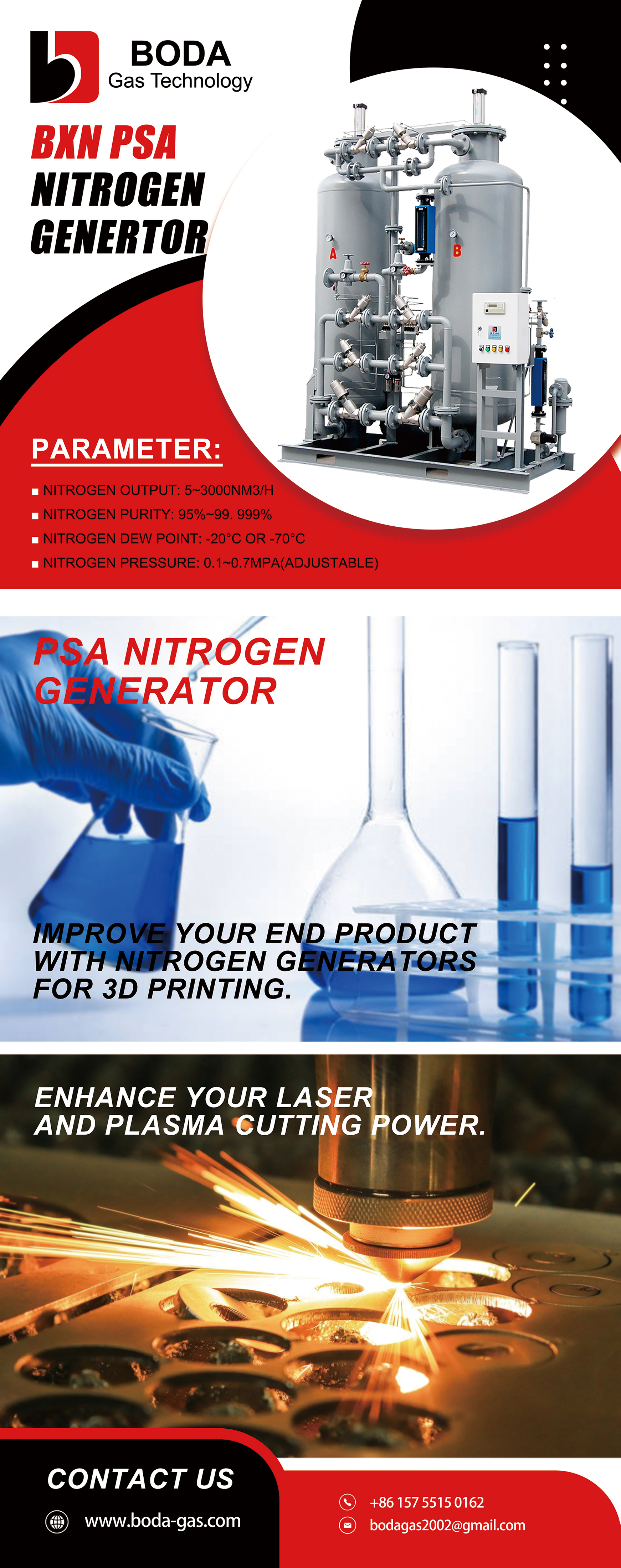
Next step: send your working parameters for a matched configuration
Share purity, flow rate, outlet pressure, voltage and application, and the BODA GAS technical team will map it to the right route — PSA, membrane or purification.
Contact: Lemon Du | bodagas2002@gmail.com | +86 157-5515-0162 | www.boda-gas.com
Download the product manual (PDF)Have Questions or Need More Details?
Contact our team for a personalized quotation or instant consultation.
Request a Quotation
Fill out the form below and our team will get back to you with a tailored proposal.
WhatsApp Direct Chat
Prefer to chat in real-time? Message us on WhatsApp for instant assistance & quick answers.
- Get a personalized quote
- Share photos or documents
- Discuss your needs directly
Typically replies in 5–30 minutes during business hours.