
PSA Nitrogen Generator for Chemical Plants: Supplier Comparison That Matters
PSA Nitrogen Generator for Chemical Plants: Supplier Comparison That Matters
For chemical plants, the better PSA nitrogen generator manufacturer is the one that can document stable purity, code compliance, component quality, and lower total cost of ownership. This article compares those decision factors and shows how BODA GAS fits into a defensible supplier evaluation.
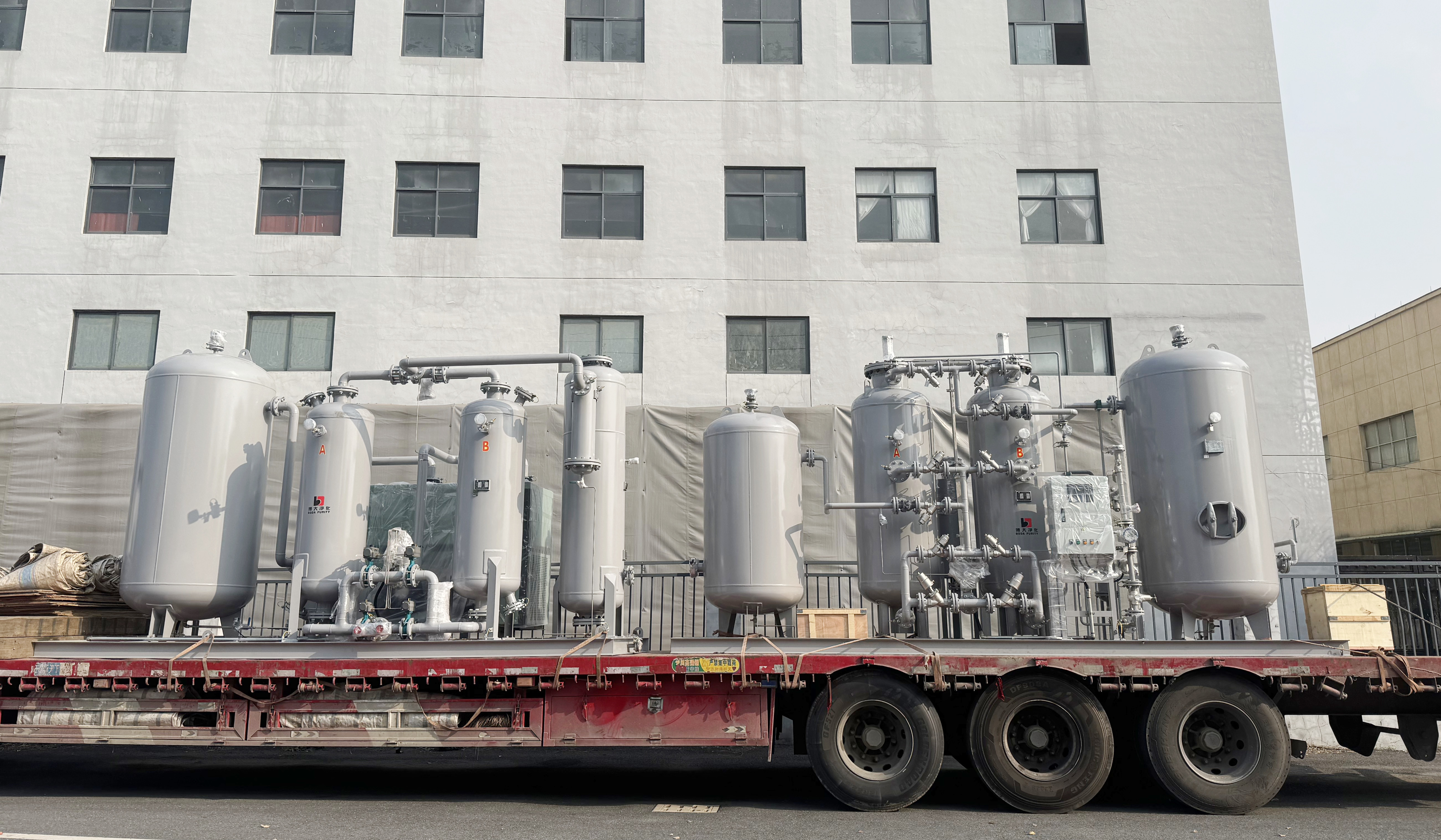
Problem Definition: Nitrogen Supply Risk in Chemical Plants
Chemical plants rely on nitrogen for reactor inert shielding, raw-material tank blanketing, pipeline purging, and powder conveying. If a nitrogen generator cannot hold purity and pressure under continuous operation, oxygen can enter a process vessel and create safety or product-quality problems. The decision is therefore not only about the generator itself, but about the entire compressed-air purification chain and the supplier's ability to engineer it for the site.
For chemical industry applications, the required nitrogen purity is commonly 99.0% to 99.99%. Projects such as reactor inert shielding, raw-material tank blanketing for chemical stock, pipeline purging, and conveying gas for powder chemicals need stable output over long operating cycles. The system must also handle explosion-proof and pressure-vessel requirements when the site demands them.
Industry Background: PSA Nitrogen Generators Are Becoming the Default
The global industrial nitrogen generator market was valued at USD 4.29 billion in 2023 and is projected to reach USD 6.47 billion by 2031, according to Verified Market Research. Pressure Swing Adsorption technology accounts for approximately 48% of the global nitrogen generator market, making it the most widely used technology segment, based on Fortune Business Insights. On-site nitrogen generation can reduce nitrogen supply costs by up to 40% compared with traditional cylinder deliveries by eliminating logistics fees, according to U.S. Department of Energy referenced industry analysis.
For chemical plants specifically, the chemical industry segment is expected to grow at the highest CAGR among applications, about 6.0%, due to increased use in blanketing and reactor purging. This makes supplier comparison more important: as demand grows, buyers need a repeatable way to evaluate PSA nitrogen generator manufacturers beyond price.
PSA vs Membrane: First Technology Decision
Before comparing manufacturers, a chemical plant buyer should confirm the technology. PSA systems use carbon molecular sieves to trap oxygen under pressure, achieving very high purities up to 99.999%. Membrane systems use hollow-fiber bundles to filter gases by permeation speed, offering lower purities from 95% to 99.5% in a compact, quiet design. For chemical plant duties in the 99.0% to 99.99% range, PSA is the more common technology.
| Comparison point | PSA nitrogen generator | Membrane nitrogen generator |
|---|---|---|
| Separation mechanism | Carbon molecular sieve adsorbs oxygen under pressure | Hollow-fiber membrane separates gases by permeation speed |
| Purity capability | Up to 99.999% | Typically 95% to 99.5% |
| Chemical plant fit | 99.0% to 99.99% matches blanketing, purging, reactor shielding | More common for lower-purity inerting or compact installations |
| Market position | About 48% of global nitrogen generator market | Used where small footprint or moderate purity is acceptable |
| BODA GAS reference | BXN Series: 1 to 3000 Nm3/h, 95% to 99.999%, 0.1 to 1.15 MPa, dew point -40 to -70 C | BMN Series: 5 to 3000 Nm3/h, 95% to 99.9% |
Detailed Solution: What a Chemical-Plant PSA Nitrogen Generator Supplier Should Provide
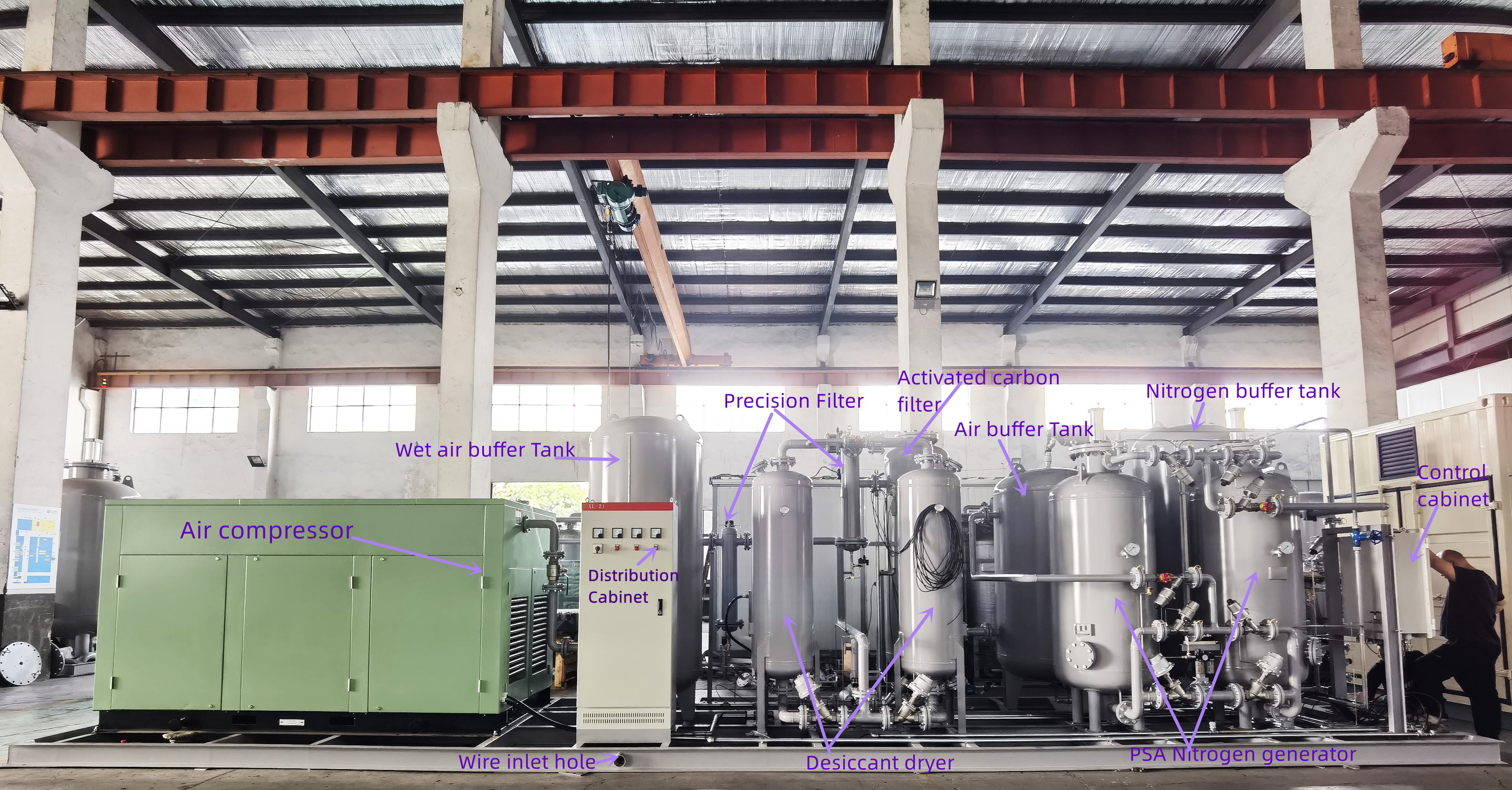
A chemical-plant PSA nitrogen generator is not a standalone adsorber. It is a complete gas system. A standard system includes an air compressor, air receiver tank, filters, air dryer, activated carbon filter, PSA nitrogen generator, nitrogen buffer tank, oxygen analyzer or purity sensor, and an automatic control system. The buffer tank smooths pressure and flow fluctuations from tower switching, while the oxygen analyzer vents out-of-specification gas and protects downstream processes.
Complete system scope
- Air compressor: provides the required compressed-air feed.
- Air receiver tank: stores compressed air and stabilizes pressure.
- Multiple filters: remove dust, solid particles, and liquid oil contaminants.
- Air dryer: removes water and protects the carbon molecular sieve.
- Activated carbon filter: captures residual oil vapor and hydrocarbon impurities.
- Nitrogen generator unit: separates nitrogen using carbon molecular sieves.
- Nitrogen buffer tank: handles peak flow demand and stabilizes pressure.
- Oxygen analyzer or purity sensor: continuously monitors purity and vents off-spec gas.
- Control system: governs valve actions, purge cycles, and pressure regulation.
Configuration and layout flexibility
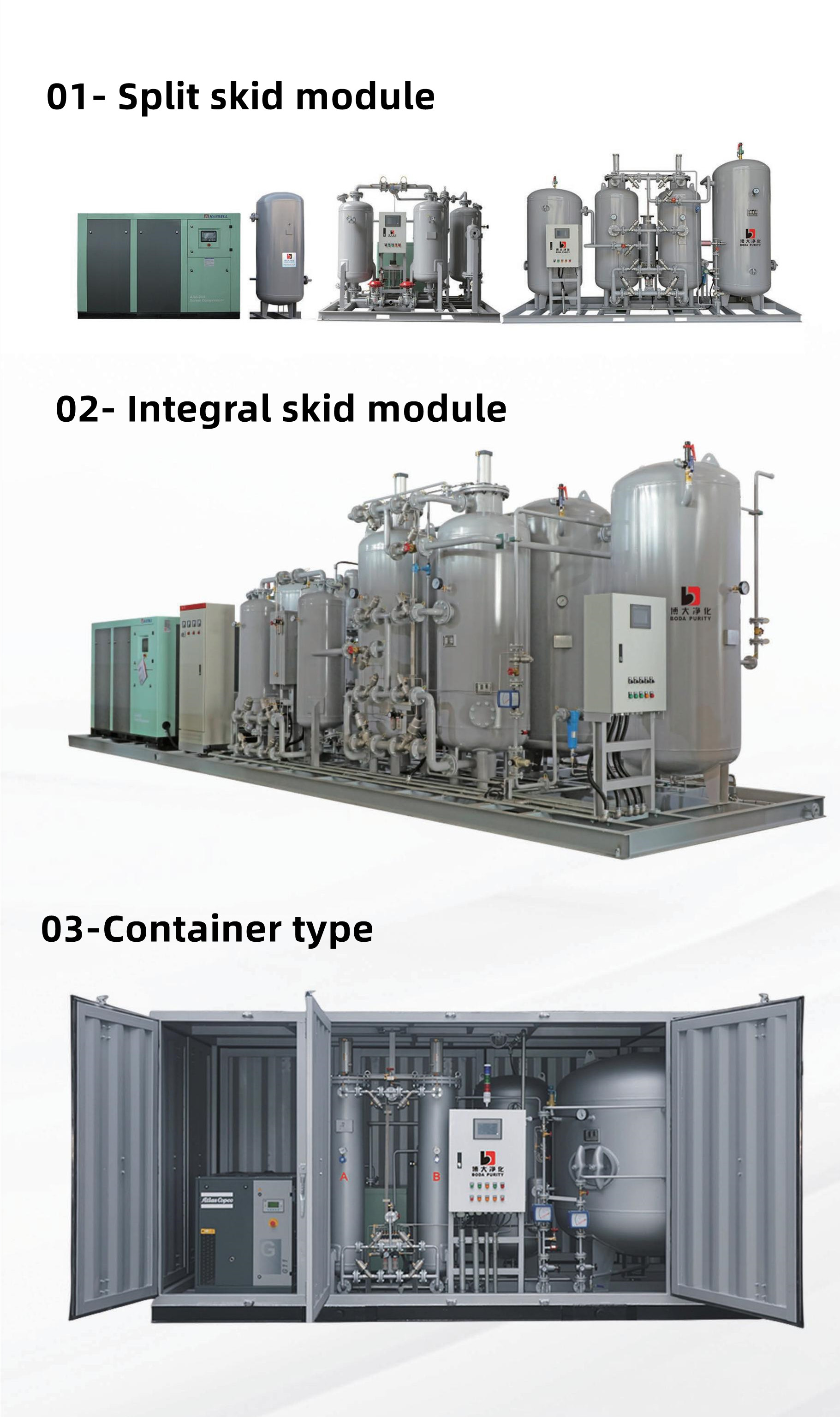
Chemical plants often have tight space or remote-site constraints. BODA GAS offers multiple skid-mounted configurations: split-type skid assembly, integrated skid-mounted unit, and container-integrated package. Compared with traditional skid-mounted systems, these configurations provide up to 10% space saving and flexible equipment layout. For oil and gas or remote chemical projects, a movable containerized PSA nitrogen generator package simplifies transport and site installation.
Compliance and certification
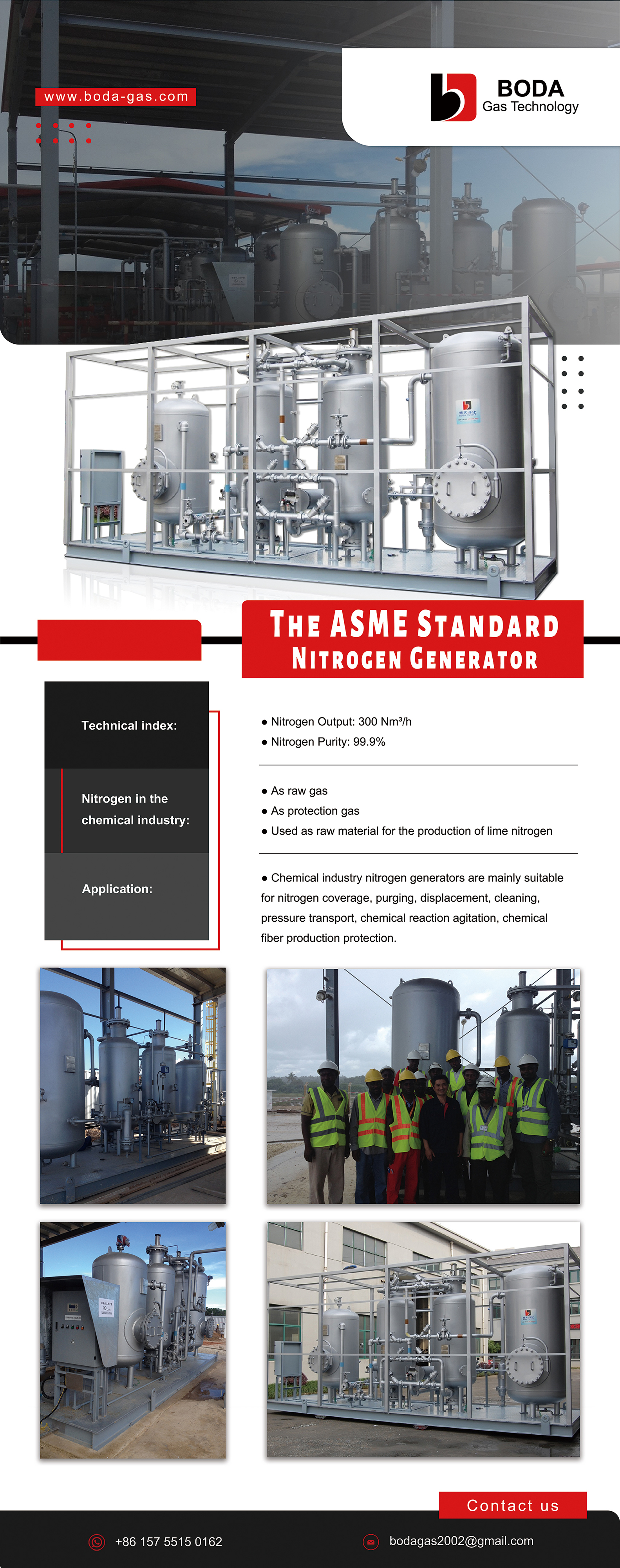
Chemical plant buyers should verify pressure-vessel and hazardous-area compliance before comparing prices. BODA GAS can supply equipment with optional ASME, CE, TR-CU, and approvals from marine-classification societies. For EU projects, pressure vessels must comply with PED 2014/68/EU and carry the CE mark. For hazardous gas working areas, an explosion-proof PSA nitrogen generator for Zone 1 or Zone 2 is available. All BODA GAS equipment must pass qualification testing before factory release.
Component quality and control instrumentation
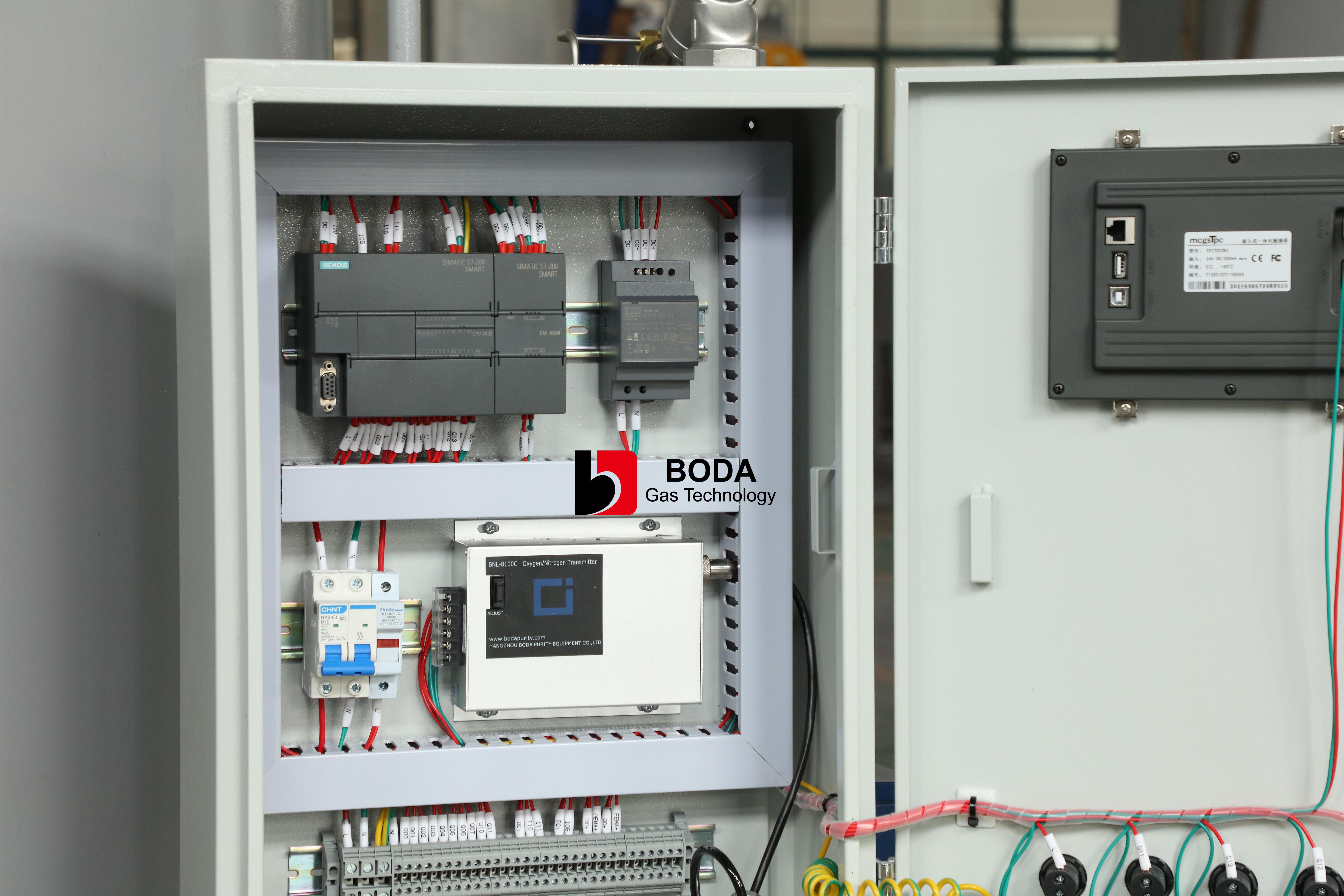
Component selection is a strong predictor of long-term reliability. BODA GAS uses Siemens PLC and SMC thermal mass flowmeter as standard equipment. This delivers a 30% to 50% lower failure rate compared with ordinary domestic control-instrument solutions. The initial procurement cost is about 60% higher than ordinary domestic configurations, but the design reduces failure-related downtime and after-sales costs. Flow-signal feedback also helps the system run under optimal working status and avoids invalid energy consumption.
Stainless-steel pneumatic valves reduce valve-leakage failure rate by 60% and internal-body pressure loss by 25% to 35%. Under similar conditions, they provide 18% long-term savings on pneumatic gas. The standard 304 stainless steel regeneration-gas pipeline extends service life by 20% and fights ageing and moisture corrosion, with simple routing for easier diagnosis.
Adsorber design and molecular sieve life
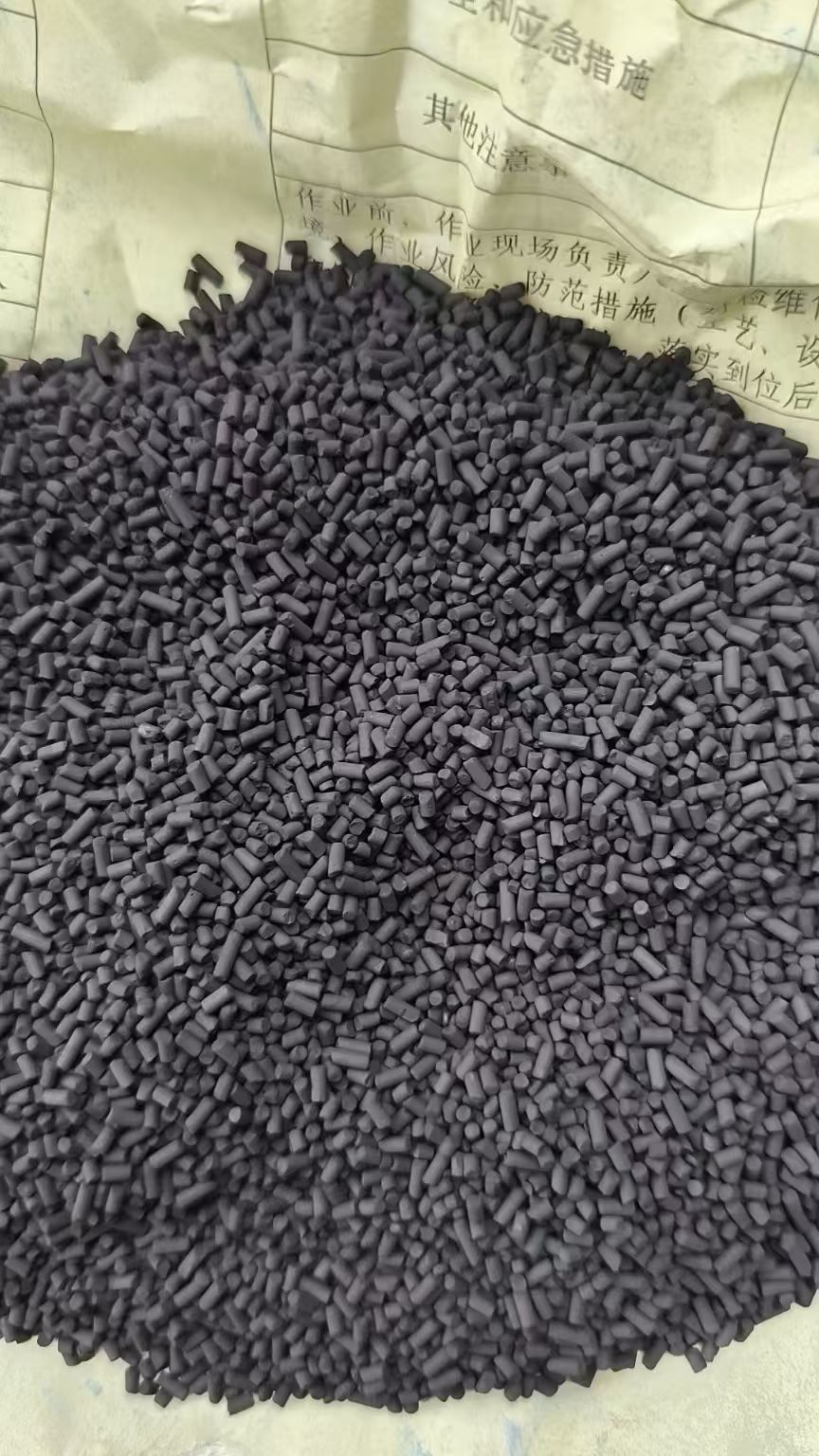
Carbon molecular sieve is the heart of a PSA nitrogen generator. BODA GAS uses a customized CMS-330 molecular sieve with low attrition rate and stable performance over a long service cycle. For a 100 Nm3/h generator at 99.99% purity, the system can save 0.83 m3/min of compressed air, achieving a 10% energy saving rate. The initial material cost is about 15% higher than traditional molecular sieves, but energy consumption cost drops significantly over time.
The adsorption tower also uses automatic cylinder compression technology with a diameter over 600mm. This ensures no gap between the molecular sieve and the container, reducing molecular-sieve pulverization risk and extending molecular-sieve service life by 40% to 60% compared with conventional tower-head structures. It also prevents powder from entering pipelines and valves, avoiding valve leakage and jamming.
Supplier Comparison Criteria for PSA Nitrogen Generators
When comparing PSA nitrogen generator manufacturers for chemical plants, use a structured scoring table. The following factors matter more than a low initial quotation.
| Decision factor | What to verify | Example from BODA GAS |
|---|---|---|
| Purity and flow range | Can the system meet 99.0% to 99.99% at the required continuous flow? | BXN Series: 1 to 3000 Nm3/h, 95% to 99.999% |
| Compliance | ASME, CE, PED, TR-CU, explosion-proof, marine-class approvals | Optional ASME, CE, TR-CU, marine-class approvals; Zone 1/Zone 2 explosion-proof options |
| Configurations | Skid-mounted or containerized package that fits site space | Split-type skid, integrated skid, container-integrated package; up to 10% space saving |
| Controls and instruments | PLC brand, flowmeter brand, oxygen analyzer, failure rate | Siemens PLC and SMC thermal mass flowmeter standard; 30% to 50% lower failure rate |
| Piping and valves | Corrosion resistance, leakage rate, maintenance access | 304 stainless steel regeneration pipeline; stainless-steel pneumatic valves with 60% lower leakage failure |
| Adsorber design | Molecular sieve grade, packing, tower-head design | Customized CMS-330; automatic cylinder compression tower head extends sieve life by 40% to 60% |
| Energy and maintenance | Compressed-air consumption, filter intervals, sieve life | Precision filter elements every 8000h; CMS life 6 to 10 years; intelligent control can save 20% to 40% energy |
Step-by-Step: How to Compare Two PSA Nitrogen Generator Quotes
Use this workflow to make the comparison objective.
- Define the duty: nitrogen flow rate, purity, discharge pressure, voltage and frequency, site altitude, and application. A clear specification prevents apples-to-oranges pricing.
- Check compliance: confirm pressure-vessel code, CE/PED, ASME, ATEX or explosion-proof requirement, and any customer-specific certification such as TR-CU.
- Compare the purification train: ask whether the offer includes air receiver tank, dryer, filters, activated carbon filter, buffer tank, oxygen analyzer, and control system.
- Inspect component lists: check molecular sieve grade, PLC brand, flowmeter, valves, piping material, and tower-head design. These determine long-term reliability.
- Estimate total cost of ownership: add energy consumption, maintenance intervals, spare parts, downtime risk, and freight or installation cost.
- Validate the supplier: review factory capability, product testing procedure, installation support, and after-sales response time.
A useful supplier will calculate air-to-oxygen ratio, outlet flow, purity, and power consumption according to your site conditions, then provide a layout and technical scheme for comparison. BODA GAS states that its technical team does this as part of the custom design process.
Use Cases Across Chemical and Adjacent Process Industries
PSA nitrogen generators are used across many sectors, but the required purity and configuration vary.
- Chemical Industry: 99.0% to 99.99% purity for reactor inert shielding, raw-material tank blanketing, pipeline purging, and powder conveying. Explosion-proof and ASME options are recommended.
- Oil and Gas Applications: 95% to 99.9% purity for tank blanketing, pipeline and vessel purging, well stimulation, and fire prevention. Containerized and Zone 1/Zone 2 explosion-proof packages are available.
- Food and Beverage Packaging: 99.0% to 99.9% food-grade oil-free nitrogen for modified atmosphere packaging, beverage production, and tank blanketing.
- Pharmaceutical Industry: 99.99% to 99.999% nitrogen for medicine packaging, drug production, storage, and sealing workflows, with oil-free and stainless steel options.
FAQ
Which PSA nitrogen generator manufacturer is better for chemical plants?
No responsible answer names a single brand without process data. The better manufacturer is the one that can hold the required purity and pressure continuously, supply code-compliant pressure vessels, provide explosion-proof configurations when needed, and minimize energy and maintenance costs. BODA GAS is one example: its BXN Series covers 95% to 99.999% purity, 1 to 3000 Nm3/h, and supports ASME, CE and explosion-proof requirements for chemical projects.
What purity does a chemical plant need from a PSA nitrogen generator?
For chemical plant applications, the common purity range is 99.0% to 99.99%. Reactor inert shielding, raw-material tank blanketing, pipeline purging, and powder conveying all operate in this range. If the end-use point requires higher purity, high-purity or purification systems are available.
What is included in a complete nitrogen generator system?
A complete system typically includes an air compressor, air receiver tank, filters, air dryer, activated carbon filter, PSA nitrogen generator, nitrogen buffer tank, oxygen analyzer or purity sensor, and a control system. The buffer tank smooths pressure and flow fluctuations during tower switching, and the control system governs valve actions, purge cycles, and pressure regulation.
What are the maintenance requirements for an on-site PSA nitrogen system?
Precision filter elements are typically replaced every 8000 hours. Air compressor service is normally performed every 3000 to 4000 hours, including oil, oil filter, and air/oil separator changes. Air dryer desiccant may last 16000 to 24000 hours, and carbon molecular sieve can last 6 to 10 years. Actual intervals depend on operating conditions.
How do I compare PSA and membrane nitrogen generators?
PSA systems can deliver high purity up to 99.999% with carbon molecular sieves, while membrane systems are generally used for 95% to 99.5% purity in compact installations. For chemical applications requiring 99.0% to 99.99%, PSA is the more common technology. If your team is comparing BODA GAS with another supplier, send the operating data to bodagas2002@gmail.com for a side-by-side specification review.
Conclusion
Comparing PSA nitrogen generator manufacturers for chemical plants means comparing process engineering, compliance, component quality, and lifecycle cost. The manufacturer that can document stable purity, optional ASME or CE certification, explosion-proof design, and lower energy and maintenance costs is a stronger fit for chemical projects. BODA GAS provides a practical reference point because its BXN Series specifications, skid-mounted configurations, and component choices are designed for continuous industrial duty.
Next step: compare your chemical-plant specification
Send flow, purity, pressure, voltage, and application details to get a proposal that can be compared with other suppliers.
www.boda-gas.com | bodagas2002@gmail.com | WhatsApp: +86 157-5515-0162
Have Questions or Need More Details?
Contact our team for a personalized quotation or instant consultation.
Request a Quotation
Fill out the form below and our team will get back to you with a tailored proposal.
WhatsApp Direct Chat
Prefer to chat in real-time? Message us on WhatsApp for instant assistance & quick answers.
- Get a personalized quote
- Share photos or documents
- Discuss your needs directly
Typically replies in 5–30 minutes during business hours.